Day camps are a fun and interactive day of activities that will be built off the Saskatchewan curriculum and infused with arts education (dance, drama, literature, music, and visual art). Day camps are run by a Saskatchewan-certified school teacher. Heavy emphasis on literature. We can focus on subjects of camp attendees’ choice, based on something they may want to explore or a school subject they may be struggling with or want extra help with.
Camp day runs from 9:00-3:00. Drop-off time is no earlier than 7:45 am, and pick-up time is no later than 5:15. Students must bring their lunch, snacks, and water. Fridge and microwave available.
Day camps are a fun and interactive day of activities that will be built off the Saskatchewan curriculum and infused with arts education (dance, drama, literature, music, and visual art). Day camps are run by a Saskatchewan-certified school teacher. Heavy emphasis on literature. We can focus on subjects of camp attendees’ choice, based on something they may want to explore or a school subject they may be struggling with or want extra help with.
Camp day runs from 9:00-3:00. Drop-off time is no earlier than 7:45 am, and pick-up time is no later than 5:15. Students must bring their lunch, snacks, and water. Fridge and microwave available.
Day camps are a fun and interactive day of activities that will be built off the Saskatchewan curriculum and infused with arts education (dance, drama, literature, music, and visual art). Day camps are run by a Saskatchewan-certified school teacher. Heavy emphasis on literature. We can focus on subjects of camp attendees’ choice, based on something they may want to explore or a school subject they may be struggling with or want extra help with.
Camp day runs from 9:00-3:00. Drop-off time is no earlier than 7:45 am, and pick-up time is no later than 5:15. Students must bring their lunch, snacks, and water. Fridge and microwave available.
Welcome to Regina Summer Camp FUN! Regina Summer Camp FUN! offers week-long day camps in Regina led by a Saskatchewan-certified school teacher to assist children in softening the student learning loss of 17%-34%.
Regina Summer Camp FUN! week-long day camps incorporate the Saskatchewan curriculum INFUSING it with arts education. The five art strands (dance, drama, literature, music, and visual art) will be extensively incorporated. This means your child will be learning the curriculum all day but having so much FUN they will not even recognize all the intense learning taking place! All subject areas will be explored with special emphasis on English Langage Arts, Math, and Science.
Each summer day camp is 5 days long (except the August long weekend) and runs from 9:00 am to 3:00 pm. Before and after care can be arranged for an additional fee. Students are required to bring their own lunch, snacks and water. Lunchtime is supervised. Each week-long summer day camp is _____ per week. Best suited for ages 6-12 years. Day camps are based out of Regina, Saskatchewan.
Space is very limited. Minimum students are required to run sessions.
For more information, please contact Jana.
The total amount due is $0.00. Payment options are as follows: 1. E-transfer; 2. Mail a cheque in the mail; 3. Monthly payment installments as long as paid in full before the beginning of the chosen session; or 4. Pay online via PayPal.
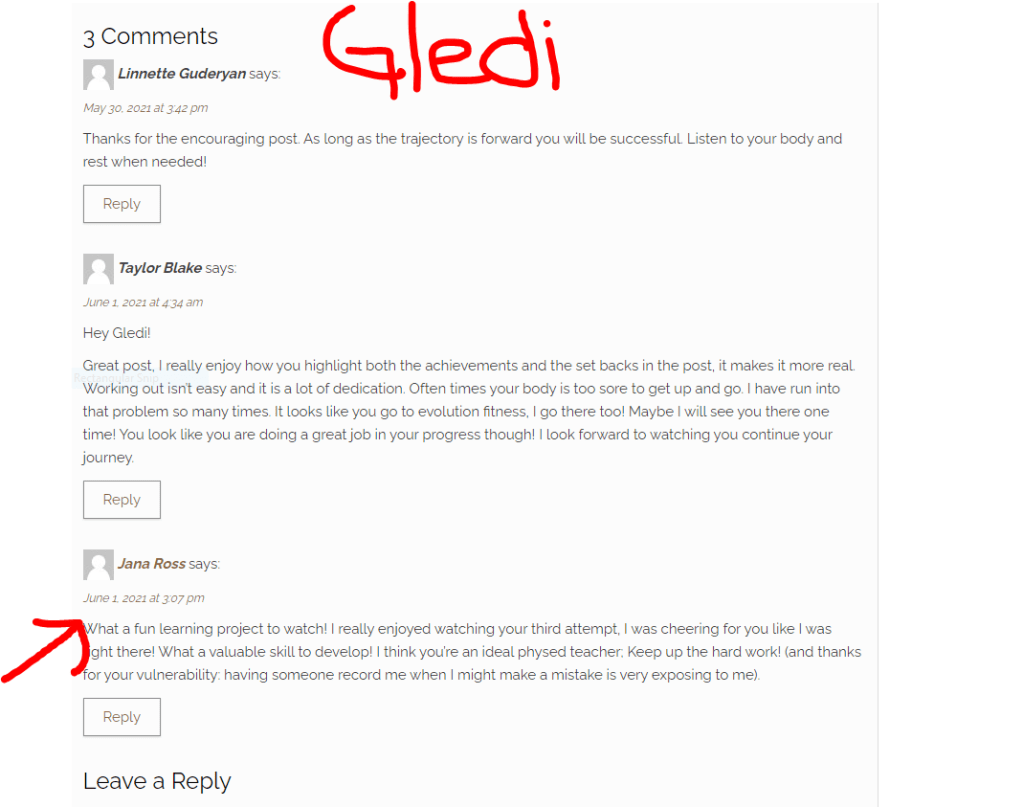
What a FUN semester! I absolutely loved this class and I put a lot of effort into it. I enjoyed reading my peers posts and I was especially drawn to one of Gledi’s earlier posts where he talked about learning to do a muscle up. I appreciated his vulnerability and I let him know.
Gledi’s blog
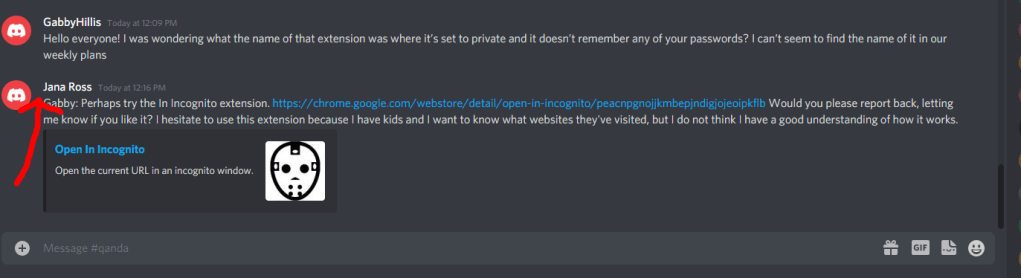
I really enjoyed the class Discord group chat and I interacted a lot using this platform. I used Discord to post ideas I came across that other teachers are doing in their classrooms. I really liked the glass analogy and I wanted my peers to know about this too!
A conversation began with an articleJeron Kletzel posted regarding a student refusing to stand for the Pledge of Allegiance. Some good group discussion happened and my comment included additional insight, citing what a football celebrity has done. Find my comment below.
Conversation on Discord, my response
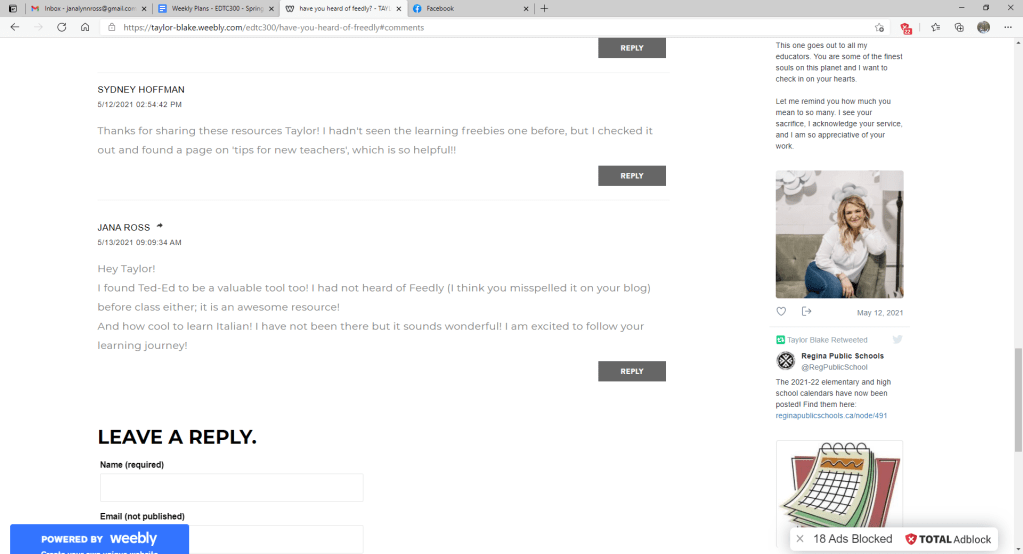
Taylor’s blog was fun to read, watching her learn Italian! We are both new to RSS readers and spelling mistakes easily happen when we are not familiar with platforms!
I enjoyed posing a thoughtful question on Discord regarding the below meme I had come across.
The article Debunking Education Memes, Part One provided an alternative way of viewing this meme that I had not considered before. I wanted to know what my peers thought. Some fun comments followed.
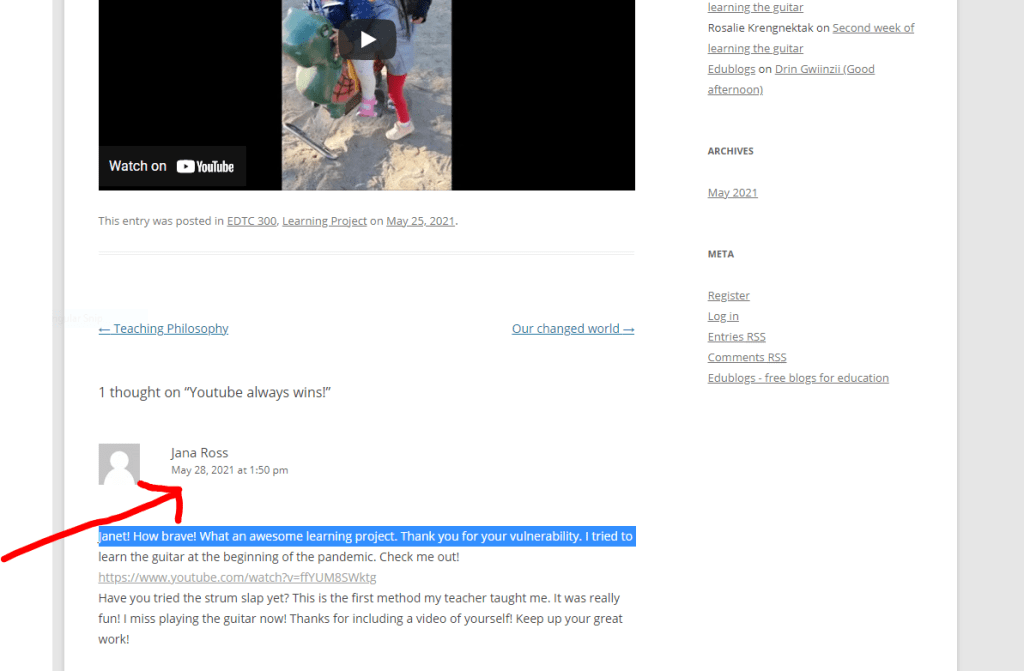
In one of Janet’s blog posts she posted her desire to learn how to play the guitar. I loved this because I too have attempted to learn to play the guitar and I gave her the YouTube link to a fun strumming technique I had learned called the strum slap.
Me responding to Janet’s blog post.
Mingyeong’s blog was also fun to interact with because she choose to learn how to use polygel nails, which I have never attempted. This is certainly a skill that requires time, practice, and patience. I hope my encouragement helped her along her journey! I really enjoyed the title of her post: ‘First Try Never Goes Well’. I thought she was being too hard on herself!
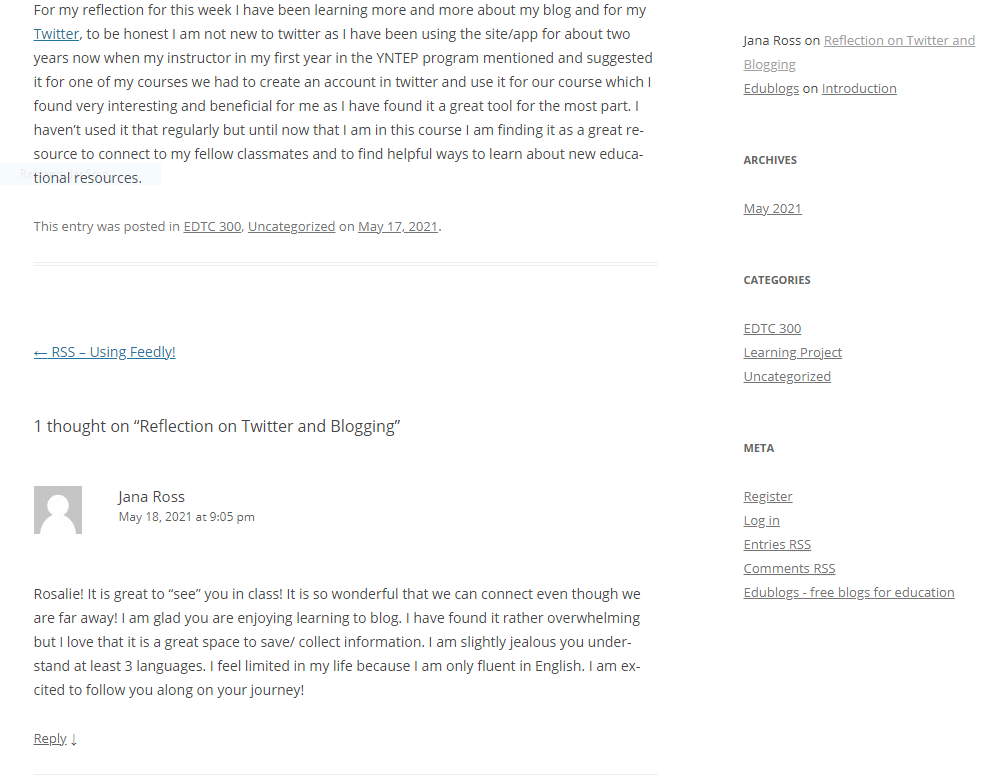
In Rosalie’s blog I responded to her blog post in which she reflected on Twitter and Blogging.
My comments to Rosalie.
The Questions and Answers section within Discord was very helpful to both me and my peers. There were no dumb questions and I enjoyed reading them because I learned from the questions and I even knew a few answers, such as the one below:
Sometimes I had questions!
Brandy Mogg’s blog was fun because she took her readers through iMovie, step by step and I have not used this before. I have used other movie editors such as DaVinci Resolve though so I enjoyed reading how they were different.
My response to Brandy’s blog post.
Ashley Peterman also choose to learn to use iMovie and she gave gave detailed instructions on how to use it and I really appreciated this so I let her know.
In Gabby Hillis’ blog, she shared her desire to learn ASL and I love this because I think it is very practical. I think as teachers we will come across students that use this form of communication. Gabby also included her blog about her using Screencastify, which I appreciated because I was not familiar with this.
My response to Gabby.
Amberlee Dayman posted an article from The New York Times regarding the effect the pandemic has had on learning loss. This was interesting to me although it left me with more questions than answers!
Discussion on Discord regarding the impact Covid-19 has had on learning loss: should this be measured?
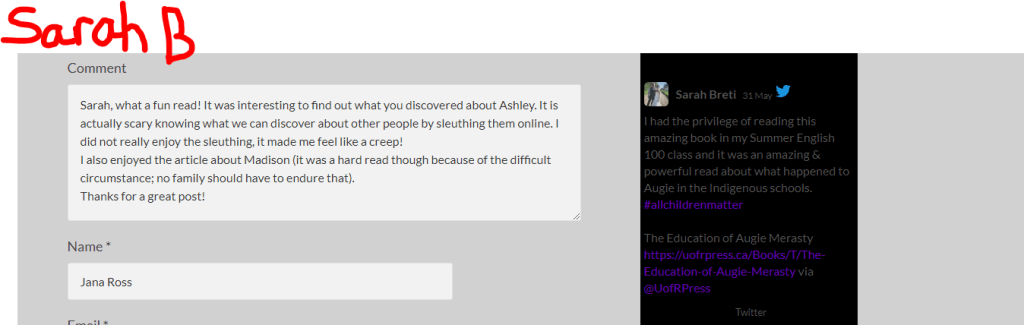
In Sarah Breti’s blog I read about her experience cyber sleuthing one of her peers. I appreciated Sarah’s reflection on Madison Holleran, although a difficult read, it is a reminder that online we are usually comparing our worst to other people’s best. Tragically, this ultimately cost Holleran her life.
My response to Sarah’s blog post regarding cyber sleuthing.
I responded again to another of Sarah’s blog posts. She was very honest and forthright about making mistakes during her learning project. It certainly was not a smooth and flawless journey!
Amberlee Dayman’s blog post regarding cyber sleuthing also caught my attention because of the title she gave it! She called it “Cybersleuth or Cyber Stocking”! Now whose interest is not piqued with a title like that!? There were a few spelling errors that made her post slightly tricky to understand. I did mention this in my comment to her although I did not want to offend her. I would want somebody to let me know so I decided to despite my hesitancy.
I like that in our Discord community we had a way to share resources and one resource that I have used a lot that nobody knew about is Morguefile. This website provides high quality pictures that do not require attribution. I shared this resource on Discord.
I was a volunteer note taker in each class to help another student, which also contributed to class network learning. All my notes can be found here.
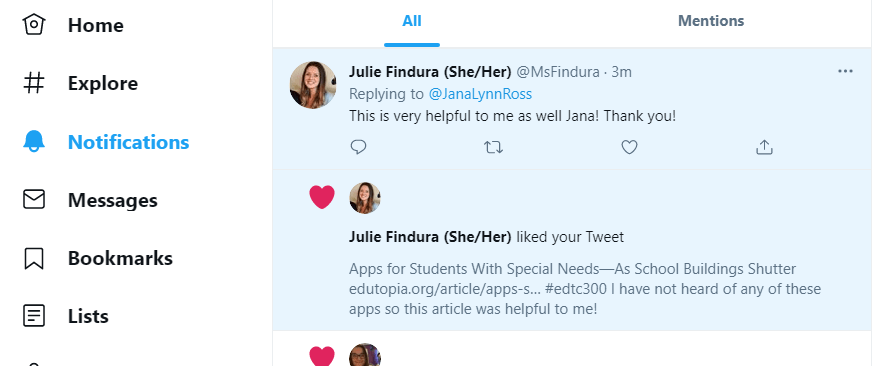
Learning to use Twitter was really fun! I had no idea this could be such a valuable resource tool. Ashley Peterman posted an excellent article regarding creativity in the classroom and I support that! Without Twitter, I would not have come across this article. Thank you @ashleypeterman_!
The first thing I needed to learn was how to use a RSS reader and what it was. I choose Feedly, although there are others. One of my favourite finds from Feedly that I tweeted about was music in the classroom. I am excited to use this idea someday! Another favourite resource I think all teachers need to be aware of is using games and activities.
Something new to me that I didn’t know Twitter offered was that someone can upload a project they are working on. Hailie P. gives an excellent example of how she was learning to code through playing Crossy Road, as uploaded to YouTube, shared via Twitter.
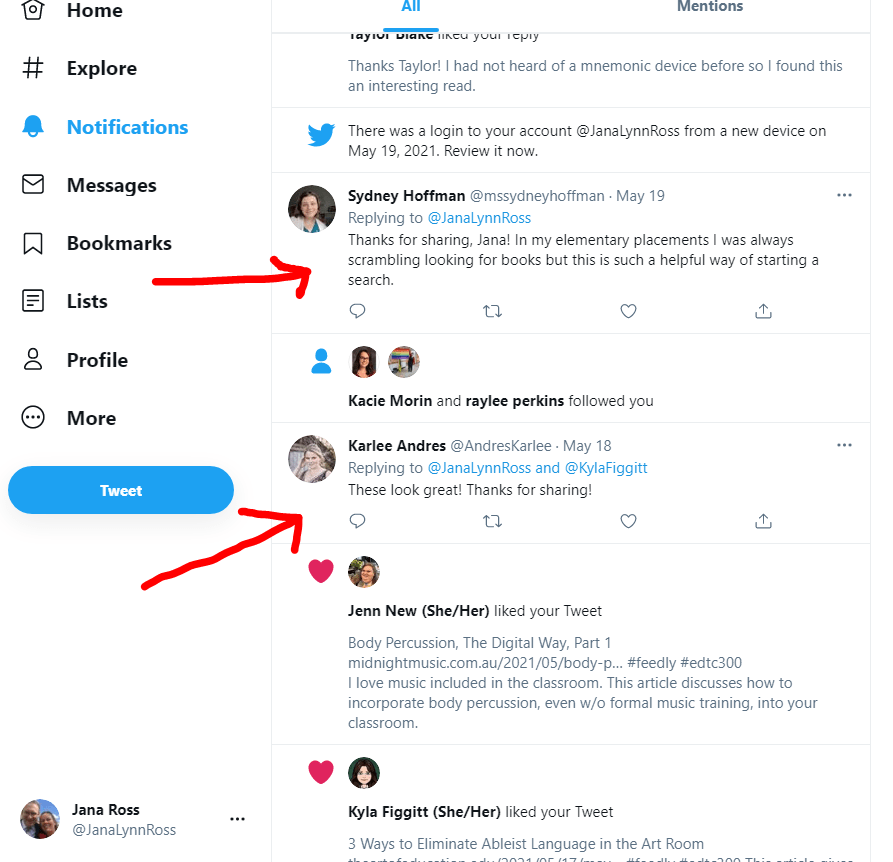
I really enjoyed the supportive community our class enjoyed on Twitter. Every day I saw encouraging comments such as these below:
Dozens of examples of the excellent giving and taking of ideas on my Twitter feed.
The last thing I want to comment on regarding my involvement with the learning of my peers is when we got to participate in the #SaskEdChat on Twitter. This was my first live chat and it was so interesting. There were many participants therefore the feed went very quickly and it was slightly overwhelming but I was still able to make a few comments and participate.
Thanks for a great semester! I hope you learned as much as I did!
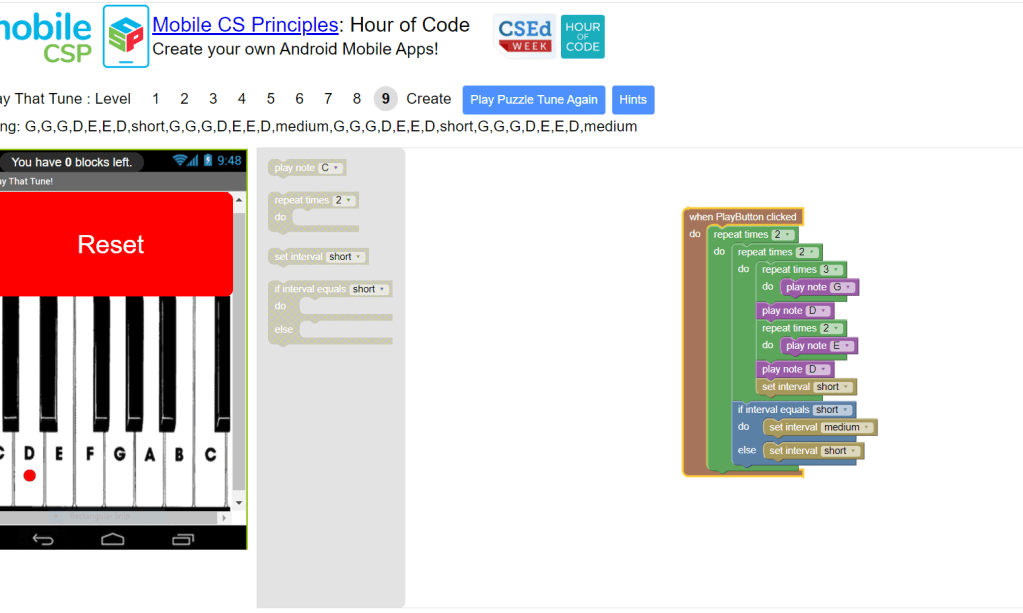
I decided to play on the coding website Code.org for an ‘hour’ of code. An HOUR became several. I choose a keyboard exercise because I actually play the piano so I thought I would have some type of advantage. The first few levels I was able to navigate through ok, although I did run into a hiccup. Have a look as I walk you through my first hiccup.
I am very proud that I was able to work through this challenge as well as my next, which required a few more steps and involved more layers. Let’s have a look!
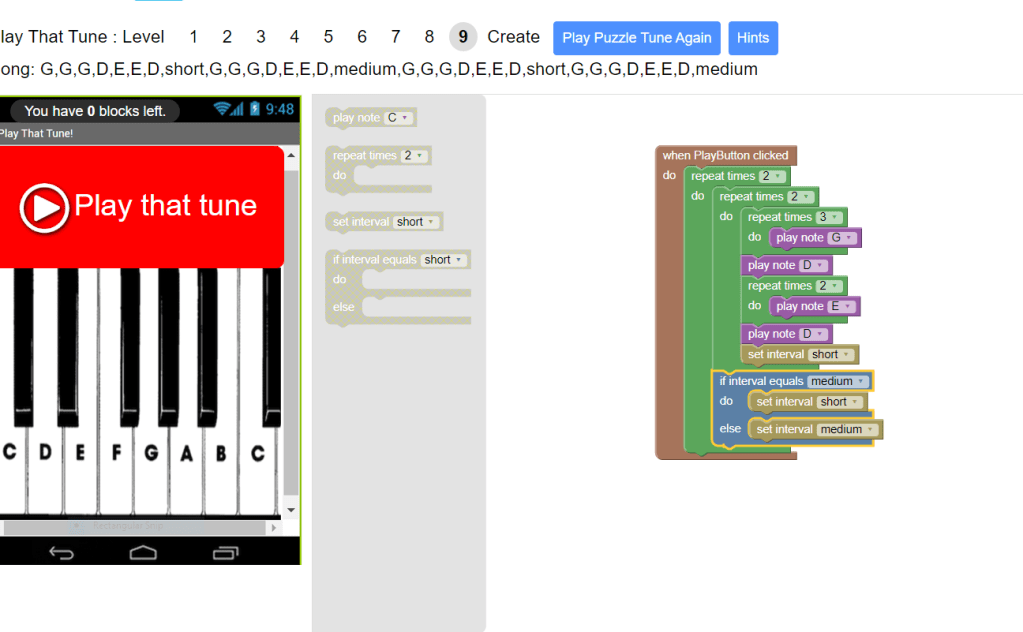
I get to my last level and this is where I spent majority of my time. I could not understand the ‘if, do, else’ block. I got very close and my project sounded the same as the one I was supposed to match but the program kept telling me “it doesn’t sound right”. I could not find the problem nor the solution. One very frustrating thing for me is that there is no pause button so once I pressed the play button I had to listen to the entire project from beginning to end. This was frustrating because I could tell very early on there was a mistake but I had to listen to the entire thing. The second thing I found extremely frustrating was the ‘Hints’ section. It would give me a few hints but I did not understand the hint. I could change a couple of things but I was not able to successful match/ solve the tune. I never did figure out the final level, level 9.
I realized after that I actually started at a grade 6 level, I thought I had started with a kindergarten level, oops. I need to go back and work myself up to understanding the ‘if, do, else’ .
I decided to try again the next day but I was still not able to successfully complete the project and I do not understand what I am doing wrong. The sample tune sounds the same as the one I have created and the “tips” section keeps giving me the same tip help, which is absolutely no help to me. This was a very frustrating experience and I am not anxious to return and retry. I felt I was left on my own to figure things out and I was not able to figure it out. How does one actually learn and understand this?
I feel like such a failure! I tried again another day with a different puzzle to solve and I did not enjoy the experience at all. I made sure to choose something under grade 6 so my new attempt was a grade 2+. I think I only made it to level 6 before I was so frustrated. I do not seem to understand what the computer is requiring and I certainly did not have the patience to sit and invest more time in understanding it. I am really not sure how kids can find this interesting or fun because for me it was so painful and frustrating!
I am thrilled to be writing on this topic because, as an arts education student, this is my realm! The five art strands (dance, drama, literature, music, visual art) are meant to challenge ideas, question things, see, seek, ask, and value things from different and sometimes opposing and/ or uncomfortable standpoints. I’ve been trained to embrace social issues in the classroom, encouraging students to question and come to solutions and/ or conclusions, or make others aware of alternative ways of seeing, through their art. And fake news is a HUGE social issue! Art speaks to humans in a myriad of ways that nothing else can. For example, when you see this art installation are you not automatically, immediately, and intensely committed to keeping plastic out of our waterways?
To tie digital literacy into arts education in a grade 6 classroom I suggest using the outcome CR6.2 Investigate and identify ways that the arts can express ideas about identity. The indicator that works best is b. Reflect on and discuss the intentions, problem-solving processes, and interpretations of own and others’ arts expressions including how they relate to the concept of identity.
Literature, as a form of art, comes in a huge array of possibilities which includes fake news. Provide the students with grade appropriate news stories and teach them how to identify what is fake and what is real. The most alarming thing I learned this week comes from Garry Kasparov, the chess Grandmaster and political activist, when he said, “The point of modern propaganda isn’t only to misinform or push an agenda. It is to exhaust your critical thinking, to annihilate truth.” To annihilate truth!? We need to be very, very concerned and therefore I am committed to teaching young minds how to appropriately challenge and question what they see, read, and hear.
This video provides 5 steps of how we can help students make their way through the sea news they see on a daily basis.
The NCTE is committed to increasing “the quality of English Language Arts instruction at all education levels”. This can be further supported in this grade 6 arts education class because students need to construct meaning from what they are ingesting. When students create their art, their “comprehension of the text was profound” because they study the text in a different way outside of their English class.
Let’s look at another example, a grade 3 class. The outcome is: CR3.1 Describe ideas and problem-solving processes used in own arts expressions and the indicator is: a. Identify and describe how arts expressions make them think and feel; c. Discuss own and group inquiry and creative problem-solving processes (e.g., the paint kept getting muddy so I cleaned my brush more often; the troll was bossy in the beginning; my partner and I thought it would look better if we jumped at the same time; we couldn’t hear the voices so we played softer).
Again, the teacher can provide grade appropriate art expressions, in this case, fake news stories such as the tree octopus. A class discussion will identify how the students are feeling and thinking regarding the fake content provided. A teacher led discussion can teach the students how to problem-solve. Websites such as Break the Fake dedicated to helping students learn how to separate fake from truth can be fun and informative.
Perhaps you are still not convinced this can work in a classroom? Or certainly not in a primary classroom? Let’s have a look at grade one, outcome: CP1.3 Enter into the fiction provided by the drama. Indicators: a. Ask questions to contribute to inquiry on a drama topic (e.g., What if all the animals in the town disappeared?); c. Listen to the contributions of others and seek ways to be inclusive of others’ ideas and points of view; d. Collaborate with others in dramatic contexts.
Introduce this video to the grade one’s and invite them to choose one of the fake story ideas (Prime Minister has a pet alien, all rivers will be turned to ice cream by 2050, etc.) and invite the students to ask questions and contribute, listen to their peer’s ideas, and then collaborate with their peers to turn this into a short drama.
Teaching students of all ages and grades does not need to be difficult or time consuming. It can simply be added to what we are already doing, as in the three examples I just provided. By exploring these ideas, we can “find new teaching allies“, as the NCTE states, where we can “learn new ideas for delivering instruction“.















 Jana Ross